
Kinesiology & Emotional Balancing
Our approach to Kinesiology
Whole system Kinesiology, not just one muscle
Each individual muscle is respected for its connection to a particular meridian, neural pathway, postural function, emotion and internal process
We work with the whole person, and in co-operation, not on someone
Posture, pain patterns and emotional responses are analysed as supportive clues, not just muscle response
We have experience in many modalities (movement, massage, fascia release, hypnotherapy, nutrition, EFT, flower remedies etc.) which I combine for maximum effectiveness
Empowerment and sharing of knowledge to facilitate selfcare and understanding beyond the session
What is Kinesiology?
Kinesiology balancing relies on the “neural map” held by our muscles which connects our memory with our structural, physiological, psychological and energetic state.
This neural map is formed throughout our development as an infant (a lot of neurological reflexes for instance are acquired in the first 6 months of life) and continues to be informed by our life choices and experiences from cradle to grave.
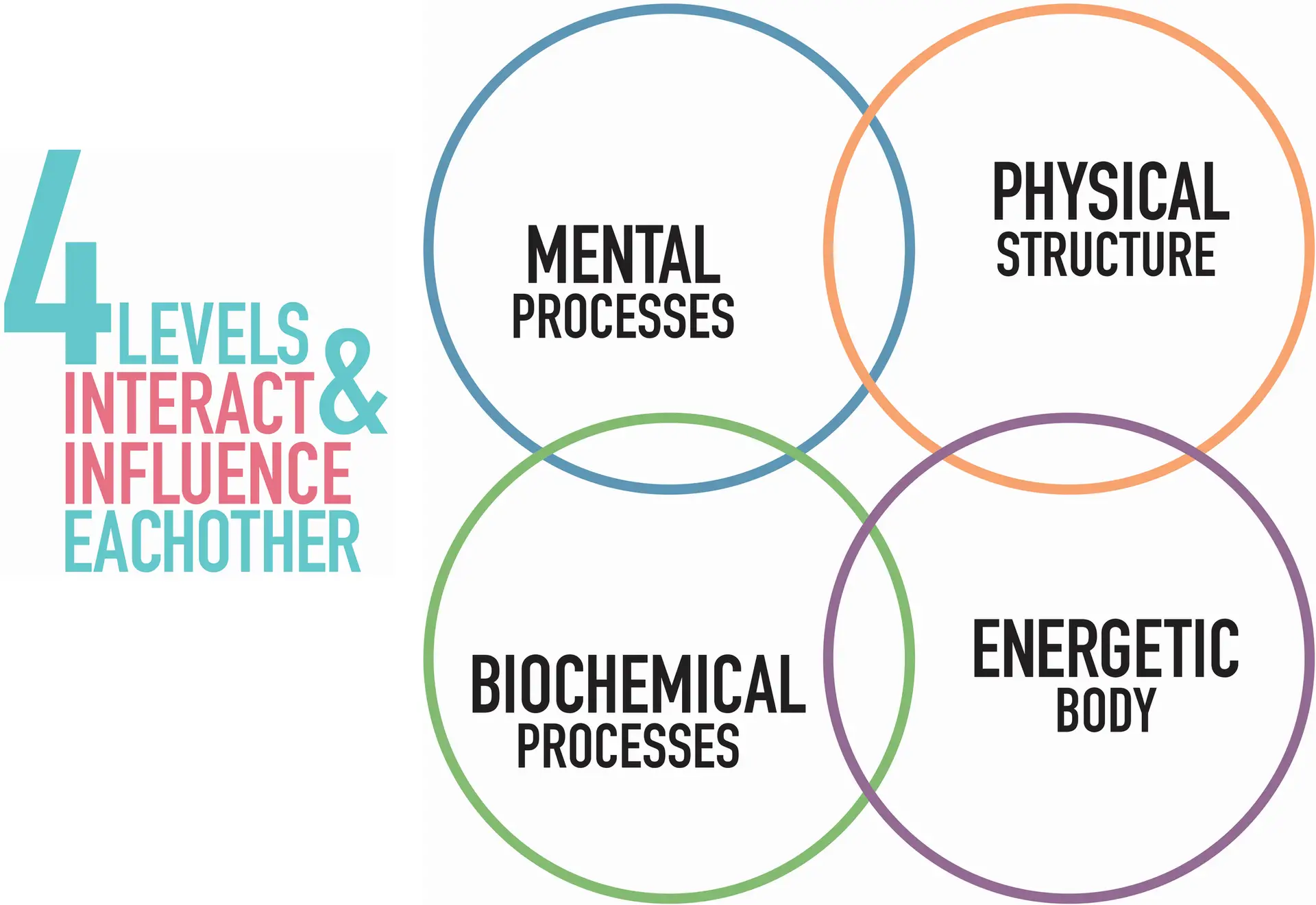
Like the rest of our body, our brain is anchored in our physical structure, our mental awareness and capacity, and our biochemistry, while our neurology is continually fashioned by our choices of movement, thoughts and nourishment. Each of those choices participate in the ongoing etching of our “neural map” and ultimately our essence.
From this perspective, emotions, though overwhelmingly enmeshed in our life experience, are viewed as consequence of the equilibrium between the interactions of our environment, including other people, and our thoughts (conscious and unconscious), muscles (including connective tissue), and biochemical processes. This means we do not choose our emotions, but we do choose our actions and activities, our food, the words we use for ourselves and others, etc. The self-care techniques available to help manage our internal processes, from exercise to conscious breathing, are evidence of this intimate relationship between the body and the mind.
The bio-feedback effect between neurology, mind and muscles is how we can reliably interview a muscle to gain insights about the rest of someone’s body and/or mind.
Kinesiology (sometimes also called “Muscle Testing”) specifically refers to the art of measuring a muscle’s response to light pressure as a means of enquiry. The global assessment of key muscles gives access to a person’s internal and energetic processes in the here-and-now, but also possibly in relation to a stressful event (past or future) and/or to a food, a supplement or an activity. The muscle response can detect if something we think, do or eat is integrating/supportive or disintegrating/stressful. It can signpost areas that need support or that need letting go.
There are many techniques and remedies available to rebalance mind and body using Kinesiology. The muscle test makes it possible to assess the specific areas that need attention and to identify the best support. The aim is to facilitate healing by re-patterning the neurological connections that exist within our muscles and which conspire to create our habitual or reactive responses. In this way we can gain more control of our emotions, more freedom in our movements and more creativity with our choices, facilitating a more joyful way of living.
How many sessions are recommended?
I recommend three sessions, a couple of weeks apart initially.
One of the fundamentals of Kinesiology is that where “it is, it isn’t” meaning that what motivates someone to seek help is rarely where the problem really is, which is why it has become difficult to address the issue without help.
Unwinding the source of pain whether emotional or physical, and repatterning the neural map that has led to the pain, takes time and focus.
Yet Kinesiology, and emotional balancing using Kinesiology, can be a fast and effective way to address the following:
- Pain and injury
- Addictive patterns and behaviour
- Anxiety
- Anger and resentment
- Low mood and exhaustion
- Lack of focus and motivation
- Fear and phobia